How to Save Short Term Capital Gain Tax on Property
Learn how short term capital gain tax on property works, how to calculate it, and which common mistakes to avoid, all in simple words.
By Muskan Panchal · 2 Nov 2026 · 8 min read
Did you sell a flat, shop, or plot soon after buying it? Then you may owe short term capital gain tax on your profit. Don't panic! This guide explains everything in plain words, like a friendly elder sibling would.
First, you will learn what the tax means. Next, you will see how to calculate it. Finally, you will spot common mistakes and smart ways to pay less. Let's begin!
Short Term Capital Gain Tax Explained
A capital gain is the profit you make when you sell something valuable. A house, a shop, and a plot of land all count as "capital assets." That simply means things you own that hold value.
Now, "short term" depends on time. For property, you hold it for 24 months or less. For example, Anita buys a flat in January 2025 and sells it in October 2026. She held it for 21 months, so her profit is short term.
So, short term capital gain tax on property is the tax you pay on that quick profit. People also call it STCG. However, if you hold a property for more than 24 months, the profit becomes long term, and different rules apply. You can read about them in our Long-term Capital Gain blog.
Quick note: LT-CG means long-term capital gain, while ST-CG means short-term capital gain. This blog covers ST-CG only.
Short Term Capital Gain Tax Rate
First, here is the good news: short term capital gain tax on property has no special rate. Instead, the government adds your profit to your yearly income. Then it taxes the total at your normal income tax slab. A "slab" is simply the rate that matches your income level.
For example, Rohan earns ₹8 lakh from his job and makes a ₹10 lakh profit on a plot. His total income becomes ₹18 lakh. As a result, part of his profit falls into a higher slab.
Also, you pay 4% "cess" on top. Cess is a small extra tax for health and education. In addition, indexation, which means raising your buying price for inflation, does not apply to quick sales.
Finally, India's new Income-tax Act, 2025 started on 1 April 2026. Section numbers and wording may differ from the old Act, so confirm the latest position with a chartered accountant (CA).
Calculate Short Term Capital Gain Tax
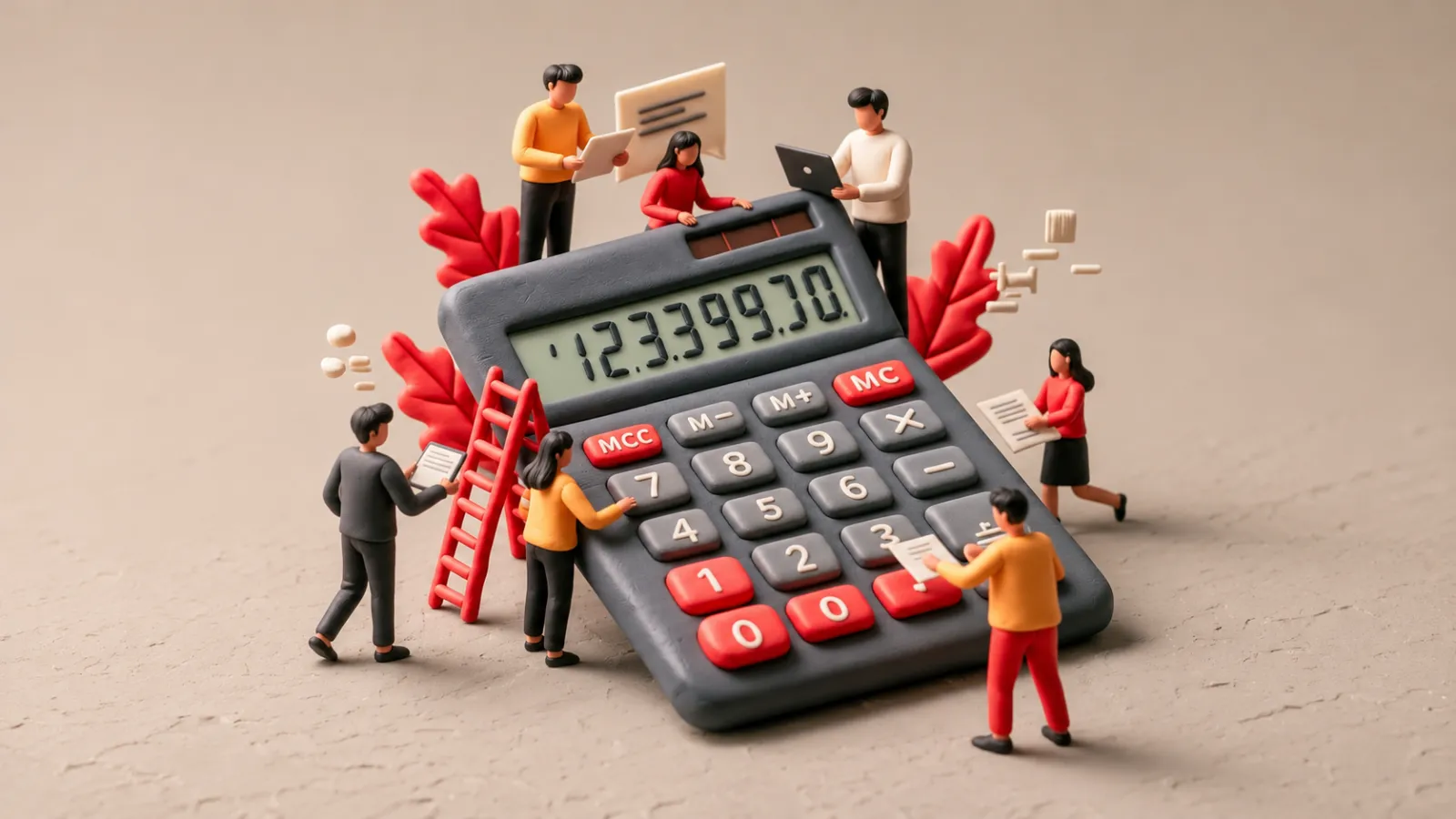
Calculating short term capital gain tax on property takes three easy steps:
Find your sale price.
Subtract your total cost.
Add the gain to your income and apply your slab.
Here is the formula:
Gain = Sale price − (Buying cost + Improvement cost + Selling cost)
Buying cost means the price plus stamp duty and registration fees. Improvement cost means money you spend to upgrade the property, like a new boundary wall. Selling cost means broker and legal fees.
For example, Meena buys a plot for ₹40 lakh and pays ₹2.5 lakh in stamp duty and registration. Next, she builds a wall for ₹1.5 lakh. After 18 months, she sells the plot for ₹55 lakh and pays ₹50,000 to a broker.
Her total cost is ₹44.5 lakh. As a result, her gain is ₹10.5 lakh. She adds this to her income and pays tax at her slab rate.
Also, watch the stamp duty value. Under Section 50C, the state sets a "circle rate," which is the minimum value for land in an area. If that value is higher than your sale price, the tax office may use the higher value. However, a 10% cushion applies. For example, your friend sells a plot for ₹50 lakh, but the circle rate says ₹60 lakh. The gap is more than 10%, so ₹60 lakh counts as the sale price.
Finally, if the price is above ₹50 lakh, the buyer deducts 1% TDS. TDS means tax cut at source, before the money reaches you. You can claim credit for it when you file your return.
Five Main Types of Transfers
The Transfer of Property Act, 1882 names five ways to transfer property. However, not every type triggers short term capital gain tax. Let's check each one.
Sale: You hand over the property and take money. If you sell within 24 months, STCG applies. For example, a friend sells a plot after one year.
Gift: A family gifts a house to their daughter. She pays no tax when she receives it. However, if she sells within 24 months, the parents' holding time also counts, and their original cost applies.
Mortgage: A person pledges a flat to a bank for a loan. The person still owns the flat, so no capital gain arises.
Lease: A shop owner rents out a shop. The rent counts as income, not capital gain.
Exchange: Two friends swap one plot for another. The tax office treats this like a sale, so STCG can apply.
In short, sales and exchanges create capital gains. Gifts, mortgages, and leases usually do not.
Short Term Capital Gain Tax Exemptions
Here comes the tough part. The famous exemptions work only for long-term gains under the old Act. These include Section 54 (buy another house), Section 54F, and Section 54EC (invest in specified bonds). Therefore, you cannot use them to cut short term capital gain tax on property.
However, you still have smart options:
Claim every cost: Add stamp duty, brokerage, legal fees, and improvement bills.
Set off losses: A short-term loss on one property can reduce your short term capital gain tax on another. Also, you can carry the loss forward for eight years if you file your return on time.
Pick your date: For example, Ravi plans to sell in month 23. If he waits until month 25, his profit becomes long term, which often means a lower rate. However, compare both options first.
Use a low-income year: Since slabs decide the tax, a year with less income can help.
Also, you pay no tax when you receive a gift or an inheritance. Tax only comes later, when you sell.
Reporting Your Gain in ITR
After the sale, you must report the gain. First, pick the right form. People with capital gains usually file ITR-2. Next, fill in the capital gains schedule with your sale price, costs, and dates.
Also, pay advance tax if your total tax for the year crosses ₹10,000. Advance tax means paying tax in installments before the year ends. Finally, check Form 26AS to confirm the buyer's TDS reached your account.
As a result, you avoid interest and notices. Short term capital gain tax on property feels easy when you stay organized.
Checklist Before You Sell
Gather these papers first:
Your sale deed and purchase papers.
Stamp duty and registration receipts.
Bills for repairs and improvements.
Broker and legal fee receipts.
The current circle rate for your area.
PAN details for you and the buyer.
Then your CA can finish the math quickly, and you avoid last-minute stress.
Common Mistakes During Transfers
Many people overpay short term capital gain tax because of small errors. Avoid these:
Counting months wrongly: Check exact dates, because selling a day early can change your tax.
Skipping the tax return: Report every gain, even when the buyer already deducted TDS.
Ignoring the circle rate: Check it before you fix a price.
Losing paperwork: Keep deeds, bills, and receipts safely, since they prove your costs.
Assuming Section 54 works: As you saw, it does not help short-term gains.
Using unregistered papers: Always register the sale deed with your state's registration office.
Forgetting TDS credit: Match it with Form 26AS before you file.
Money Matters for Rent Owners

Do you also rent out property? Then three more money topics matter to you.
GST on rent: Renting a house for living usually carries no GST. However, renting a commercial place, like a shop, can attract 18% GST when the owner's yearly income crosses ₹20 lakh. Check your own numbers first.
How to calculate rental yield: Divide the yearly rent by the property's value, then multiply by 100. For example, a shop worth ₹50 lakh that earns ₹4 lakh a year gives an 8% yield. A higher yield means better returns.
TDS on rent: When an individual tenant pays more than ₹50,000 a month, the tenant usually deducts 2% TDS and pays it to the government. Other tenants follow different limits.
You can learn more in our related blogs: GST on rent blog, how to calculate rental yield blog, and TDS on rent blog.
Short Term Capital Gain Tax FAQs
1. What is the holding period for short term capital gain tax on property? It is 24 months or less. Beyond 24 months, the gain becomes long term.
2. What rate applies to short term capital gain tax? Your normal income tax slab applies, plus 4% cess.
3. Can Section 54 save short term capital gain tax? No. Section 54, 54F, and 54EC work only for long-term gains.
4. Do I pay tax on a gifted property? No, you pay nothing when you receive it. However, tax applies when you sell it later, and the giver's holding period counts.
5. Can I reduce my gain with costs? Yes. You can subtract your buying cost, improvement cost, and selling expenses.
Final Thoughts
In short, short term capital gain tax on property is not scary when you know the steps. Count your months, add every cost, and plan your sale date. Also, remember that big exemptions like Section 54 do not help short-term gains.
Want to verify the rules? Read the Act on India Code, check updates on the Income Tax Department website, and explore land-record reforms at the Department of Land Resources. You can also compare with our Long-term Capital Gain blog.
Explore Properties on CLinqUp
Ready to buy or sell with confidence? CLinqUp connects both dealers and buyers in one place. Buyers can discover properties, and dealers can reach genuine buyers.
Visit clinqup.com or download the CLinqUp app today.